Clinics offering vision correction services are undergoing a technology-driven revolution. Laser, diagnostics, and lens-based advancements have changed not only what correction is offered but how those procedures must be communicated and marketed.
Traditional marketing of vision correction was always relatively simple. But speed and convenience messaging for a single procedure – LASIK – no longer works. Customers have more information and more options than ever, and they’re looking for more.
Patients are savvier, more cautious, and they know there are different procedures depending on their eyes, their age, and their needs. Modern vision correction technology has forced clinics to change their advertising, as being clinical-led is now part of being patient-led.
This article looks at the latest technologies used in vision correction and how they are now changing how clinics must advertise, reposition themselves, and attract the right patients.
The Vision Correction Industry Is Evolving Fast
Vision correction used to be a much simpler industry. Technology has changed not just clinical procedures, but also patient expectations, advertising compliance requirements, and clinic positioning.
Why Patients Now Expect More Than “LASIK Ads”
Customers who are researching vision correction have come to expect more than generalised promises. Online access to information, reviews, forums, and comparison content has made them more cautious and inquisitive.
Instead of asking “Can I get LASIK?”, many patients now search:
Am I suitable for laser eye surgery?
Which procedure is safest for my eyes?
What happens if laser isn’t an option?
Are there solutions for my age or prescription?
Generic advertising overselling and failing to answer these questions can create mistrust. Clinics that don’t provide early clarity risk losing credibility before the first appointment.
How Competition Is Forcing Clinics to Differentiate
As competition for suitable patients intensifies, clinics have to work harder to stand out from others with similar technology. Stating that “we offer LASIK” is no longer a strong differentiator.
Clinics now use technology to show how they:
Assess suitability,
Personalise treatment,
Guide patients through their options.
Advertising has shifted from procedures to process, expertise, and outcomes.
The Newest Vision Correction Technologies Clinics Are Promoting
Modern advertising must begin with a basic understanding of the technologies being offered. In turn, the technologies affect how procedures are advertised, where clinics position themselves, and how to use content.
Advanced Eye Mapping and Diagnostic Imaging
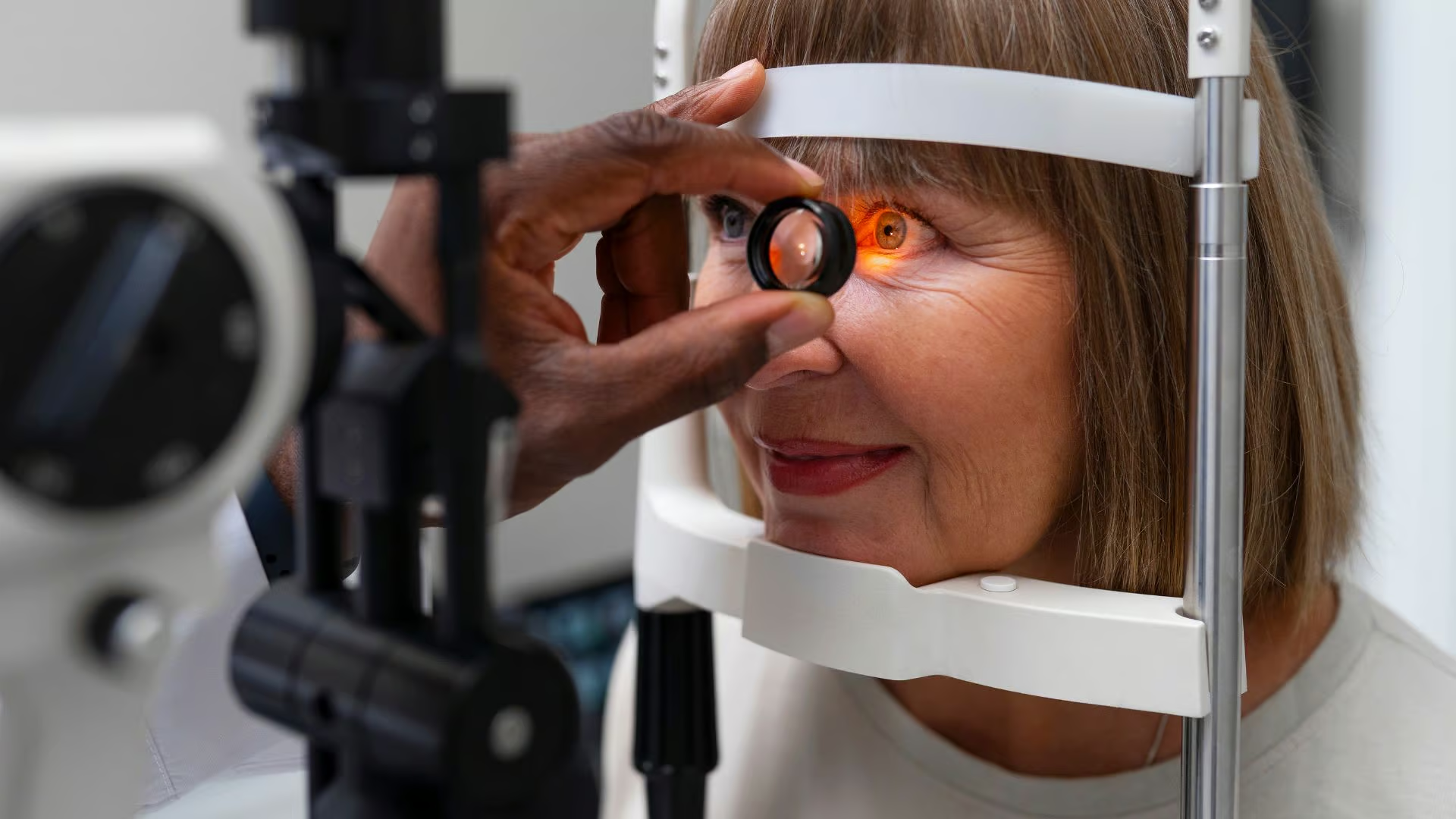
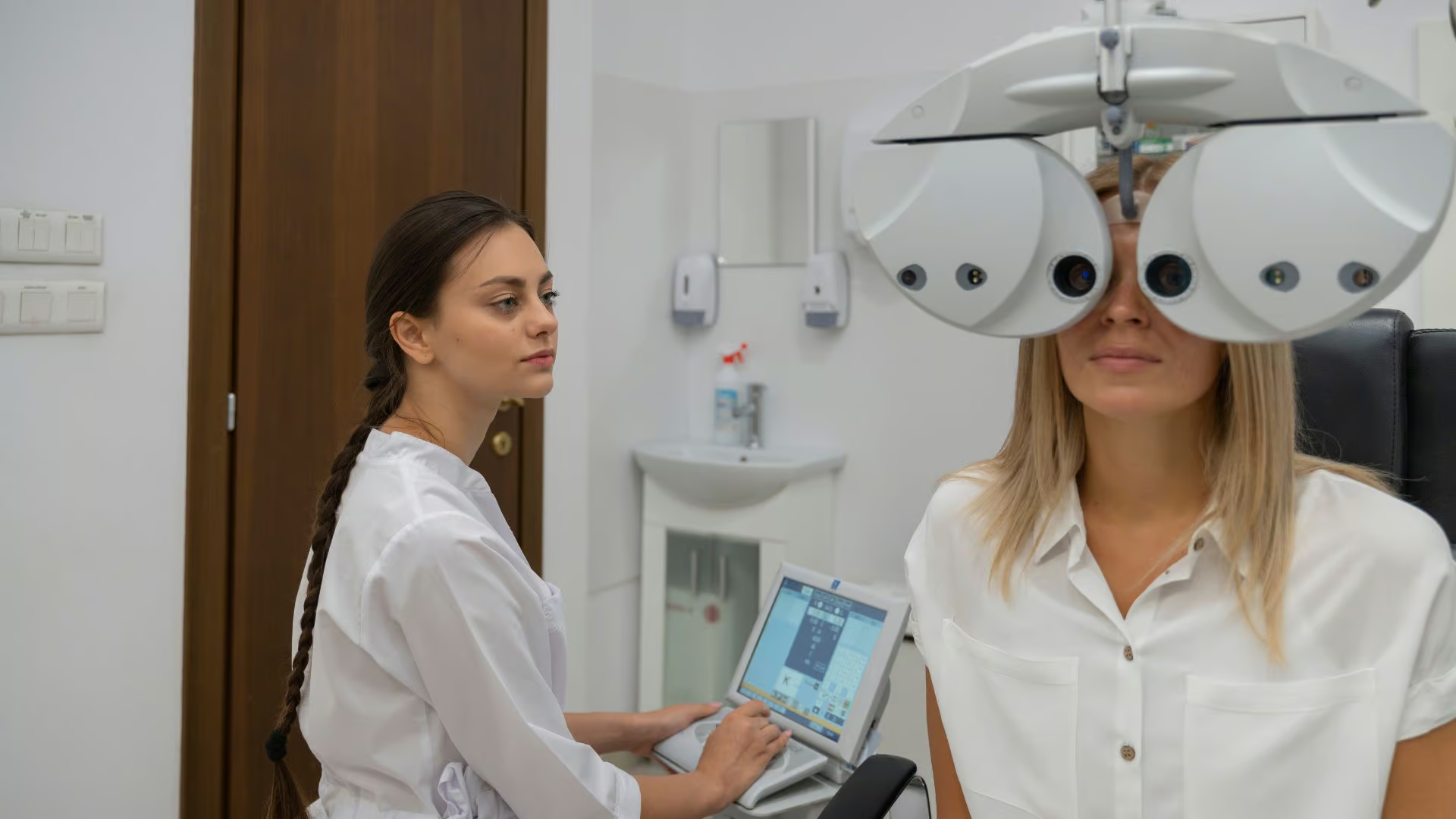
Eye mapping and diagnostic imaging now play a bigger role. In addition to prescribing correction, modern imaging can also assess eye health, corneal shape and thickness, and suitability in much more detail.
Advertising impact:
Clinics promote precision, safety, and suitability assessment over just the treatment procedure. Advertising also moves from “getting LASIK” to “should I get LASIK?”
Wavefront-Guided and Topography-Guided Treatments
Wavefront-guided and topography-guided treatments allow customised laser correction using detailed eye data to personalise treatment and customise the laser profile.
Advertising impact:
Messaging can focus more on personalisation, advanced planning, and individualised care for patients valuing quality over speed or price.
SMILE and Minimally Invasive Laser Procedures
Minimally invasive procedures like SMILE have become more popular due to the perception they offer better recovery and comfort for certain suitable patients.
Advertising impact:
Clinics can advertise “options” rather than one recommended or pushed solution. This benefits patients who are nervous or undecided about traditional laser procedures.
PRK Improvements and Surface Laser Innovations
PRK is still an important part of the mix, particularly for patients with thinner corneas or specific conditions. Improvements have been made in the procedure and in recovery management.
Advertising impact:
Clinics can advertise themselves as inclusive to patients who may not be “ideal” for other laser procedures.
Implantable Collamer Lens (ICL) and Lens-Based Correction
Lens-based treatments have also expanded the market, offering corrections for higher prescriptions or those otherwise unsuitable for laser correction.
Advertising impact:
Clinics can advertise as a vision correction centre, not just a laser correction clinic.
Refractive Lens Exchange for Presbyopia and Ageing Eyes
Reading vision and lens flexibility changes over time. Lens replacement procedures are solutions for ageing eyes, and can be the main treatment for patients over 40 or 50.
Advertising impact:
Clinics can market to life stage concerns as well as sports or career lifestylising. This opens the door to a wider, more mature audience.
AI-Assisted Planning and Personalised Treatment Design
AI-assisted software is being used by some clinics to support treatment planning and potential outcomes.
Advertising impact:
Clinics can reinforce precision and confidence but should be careful not to cross into absolute guarantees.
How New Technology Changes the Way Vision Correction Clinics Advertise
Technology is changing the most valuable benefits for patients who choose one clinic over another.
From “One Procedure” Marketing to “Options-Based” Marketing
Clinics rarely focus on a single procedure anymore. Advertising now needs to embrace choice, flexibility, and clinical judgement.
Clinics no longer just advertise “LASIK surgery” but instead promote:
Vision correction options,
Suitability assessments,
Personalised recommendations.
This improves lead quality and aligns better with expectations.
Why Clinics Should Advertise Suitability Scans First
Suitability is an essential part of the process for most clinics. Advertising the scan rather than the procedure itself positions the clinic as responsible, patient-first.
Advantages include:
Reducing unrealistic expectations,
Attracting more serious enquiries, and
Building trust before the first appointment.
How Technology Improves Trust Without Overpromising
Clinics must be confident without overpromising. Advertising now explains how procedures are recommended rather than what is offered.
Patients trust clinics they understand better. This includes the process used to make specific recommendations.
What Vision Correction Patients Search for Online
Customer search behaviour reflects the increasing complexity of decisions for customers who want vision correction.
High-Intent Keywords: LASIK vs PRK vs SMILE
Patients are increasingly likely to conduct comparison searches, and want clarity, not persuasion. Comparison content both supports SEO and paid campaigns.
Keywords for Over-40 Vision Correction Options
Keywords around reading glasses, multifocal solutions, and ageing vision are on the rise. Clinics addressing this directly can reach an often-ignored audience.
Keywords for “Not Suitable for LASIK” Prospects
A large number of patients search online having been told they aren’t suitable. New technology allows clinics to reassess these cases.
Advertising should be careful, realistic, and supportive – never implying universal suitability.
Local SEO Keywords for Vision Correction Clinics
Technology has not diminished the importance of location and proximity. Local search optimisation remains critical for both bookings and trust.
The Best Advertising Angles for Modern Vision Correction Clinics
Advanced technology allows clinics to use a range of advertising angles that can be patient benefit-focused.
Safety-First Messaging Using Advanced Screening
Safety and suitability-first messaging have strong appeal to many cautious patients.
Personalised Treatment Plans, Not One-Size-Fits-All
Treatment customisation is a key differentiator in higher-value services.
Recovery, Comfort, and Lifestyle Benefits
Customers care deeply about downtime, discomfort, and lifestyle. Technology allows clinics to better address these concerns.
Finance and Affordability Messaging Without Discount Branding
Prices are often higher for more advanced technology, and clinics can discuss affordability and finance options without leading with price-based discounts.
Content Marketing That Works for Vision Correction Clinics
Advanced technology means more education, not less.
Short-Form Video Topics That Drive Consult Bookings
Simple, clear short-form videos explaining options and processes outperform straight promotional videos.
Blog Content That Answers Procedure Comparison Questions
Educational blogs reduce friction and build trust pre-consult.
FAQs That Reduce Fear and Increase Conversion
Address common concerns head-on to improve booking confidence.
Retargeting Content That Turns Interest Into Action
Retargeting content for follow-up and decision-making support.
What Clinics Must Avoid in Vision Correction Advertising

Technology is tempting clinics to overstate their messaging.
Risky Claims and Overpromising Results
Clinics have no place making guarantees, absolute claims, or overpromising outcomes. This creates legal and reputational risk.
Before-and-After Pitfalls and Compliance Issues
Images have compliance requirements and must be supported by risk warnings and fine print.
Why Price-Only Ads Attract Low-Quality Leads
Discounted ads and price-based messaging nearly always lead to unsuitable and unhappy patients.
A Modern Marketing Funnel for Vision Correction Clinics
Technology allows for a more structured, patient-centred marketing funnel.
Awareness Stage: Education Without Overload
Introduce options and build confidence.
Consideration Stage: Comparison and Proof
Support customers in their decision-making.
Conversion Stage: Booking-Focused Landing Pages
Clear next steps convert customers.
Follow-Up Stage: Email and SMS Nurture
Ongoing education and support as they make a commitment.
How to Build Trust in Vision Correction Marketing
Trust remains the most important currency in medical advertising.
Credentials, Technology, and Transparency
Credentials, technology, and clear explanations.
Explaining Who Is and Isn’t a Candidate
Clinics must be open and honest about their suitability criteria.
Setting Realistic Expectations
Satisfaction starts with accurate and reasonable expectations.
Final Thoughts: Technology Wins When Advertising Builds Confidence
New vision correction technology has evolved not just procedures and clinical outcomes, but also patient expectations. Clinics that succeed in this new environment are those that change their advertising to reflect choice, suitability, education, and trust.
Selling a procedure has given way to guiding patients through informed decisions, using technology as part of the advertising that speaks to benefits. New technology supports this, but only when it is communicated to patients in a clear, responsible, and patient-first way.
Vision correction clinics in the modern age are those that educate first, assess patients carefully, and then advertise with both confidence and clarity.