If you operate or market for a healthcare business — you’ve probably heard people casually throw around Marketing Agency and Digital Agency like they mean the same thing.
They can be the same. But in healthcare (the vast majority of the time) treating them as synonyms creates a dangerous and expensive gap in your marketing.
That’s because the unique pressures of the healthcare market — trust, compliance, competition, and cost — mean you can’t just hire “someone who’s good with ads” to fix your digital presence.
You need to hire two different types of partner (who are often done by the same companies), or you need to hire one who can do it all. And in healthcare, you most likely need to do the latter.
This post breaks down the key differences between a Marketing Agency and a Digital Agency (definitions that are consistently fuzzy for any industry). We explain what each type does (in healthcare terms) and how they should interact, and why the right solution for growth in healthcare means the two functions working from one strategy, under one roof.
The Modern Healthcare Growth Challenge (Trust, Compliance, Competition)
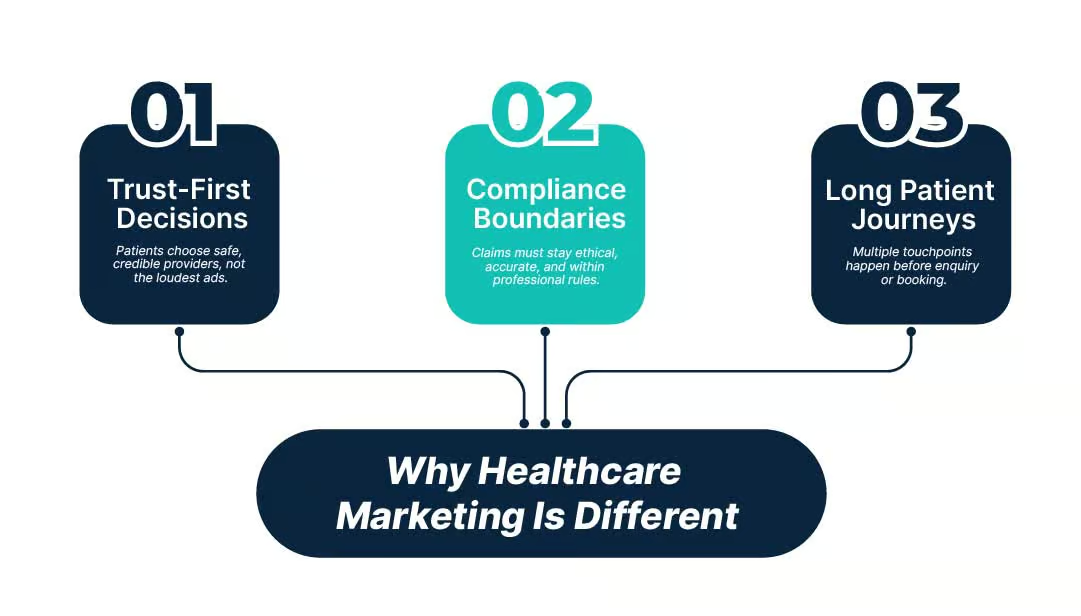
Consumers of healthcare services (in the Australian market at least) behave differently from most other shoppers. They’re less impulse-buy. More research. Safety comes first. Word of mouth matters more. And referrals often involve third parties such as family members, GPs, support coordinators, or funders (NDIS especially).
On top of that, healthcare brands have to compete within stricter pressures than almost any other field:
- Trust must be built before a booking takes place. Safety, clarity, empathy, and understanding your professional credibility are hard-won in healthcare.
- Patient journey is usually long and multi-touch. From Search → read → compare → ask someone → revisit → enquire → book — it’s not uncommon for this to take weeks.
- Marketing conduct and claim boundaries are stricter. All must be kept within professional boundaries and consumer law.
- SEO competitiveness is tighter, with higher standards. Healthcare is a “Your Money or Your Life” category in Google’s eyes. Subpar content that lacks expertise or is over-salesy will struggle to show up for the right queries.
- Digital competition is fierce. Telehealth brands, private practices, large networks, major hospitals, and government providers are all vying for the same intent traffic.
This environment makes it very difficult to hire “good with ads” digital talent to grow without a structured plan. It also means a plan (strategy) is required in the first place. So the Marketing Agency vs Digital Agency conversation matters a lot more than it would in just about any other industry.
What a Marketing Agency Does for Healthcare Brands
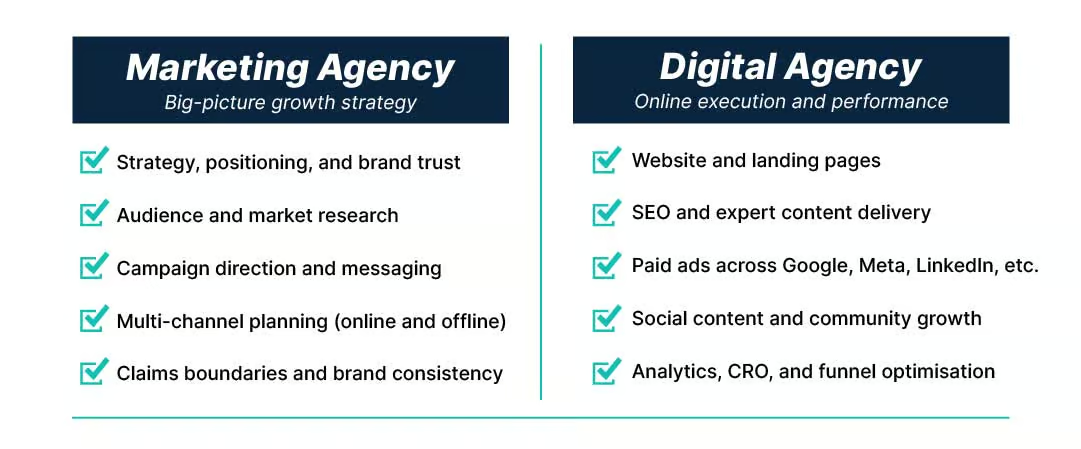
A Marketing Agency is structured to work on the big-picture growth strategy. This is the brand, trust, audience, and differentiation architecture of your business.
Marketing Agencies (in healthcare) tend to focus on:
1) Positioning and brand trust
They make sure the difference in your care is clear, and can be spoken ethically.
Examples:
- Are you fast pain relief, long term rehab, culturally safe, paediatric or complex disability?
- How do you explain your model (say, sleep therapy) without promising guaranteed results?
Good positioning and differentiation is the foundation for cutting through marketing noise and earning trust before any patient engagement.
2) Market and audience research
Marketing Agencies help you understand who your actual audience is because healthcare audiences aren’t one group.
That might include:
- your ideal patients or participants (incl. demographics)
- referrers (GPs, schools, hospitals, support coordinators)
- decision influencers (parents, carers, partners)
- local community needs
- public vs private pathways
Which services to highlight, how to package them, and the messaging required are all based on that research.
3) Channel planning beyond the internet
Marketing Agencies often have a wider scope beyond online channels (specifically because of who they report to).
They often help with:
- referral systems and partnerships
- community engagement (offline)
- events and local visibility
- printed collateral
- PR
- broader campaign planning
If digital channels are part of it, they’re usually there as part of a wider plan (market share, reputation, awareness, local community).
4) Campaign strategy and messaging
They also author the story of your growth:
- campaign objectives
- tone and language guidelines
- compliant claims framework
- offer design
- funnel logic
5) Brand governance
Marketing Agencies usually create the brand rules that keep your presence consistent:
- brand voice
- key messages
- service narrative
- approved language and claim boundaries
- visual identity guardrails
In short: a Marketing Agency decides what to say, to whom, why it matters, and how success will be measured.
What a Digital Agency Does for Healthcare Brands

A Digital Agency specialises in online channels, user experience, and digital growth. Their job is to optimise digital points of contact with your brand, under an existing or their own strategy.
In healthcare, Digital Agencies focus on:
1) Website and landing pages
Website is the foundation of digital trust and decision support in healthcare, so it’s where Digital Agencies focus a lot of attention.
Key functions are:
- service pages answer real patient questions
- service pathways and eligibility are clear
- booking is easy
- trust signals are obvious (credentials, associations, policies)
- UX for support or vulnerable users, not website design as an end goal
A healthcare website has to educate, reassure, and convert — all at once. Most services have to achieve that on 2–4 landing pages.
2) SEO and content delivery
SEO content is still critical. But in healthcare the production pipeline, language and clinical nuance, and need for regular updates is significantly more complex.
Digital Agencies handle:
- keyword research
- on page SEO
- technical SEO
- local SEO
- content plans and production
SEO is harder when content needs to have “expert level” for it to rank (consumers want an expert they can trust. Ads with hype don’t work in healthcare).
3) Paid advertising
Paid advertising is more difficult in healthcare. Ad claims must not over-promise or act like ads for other healthcare services.
They manage performance campaigns such as:
- Google Search for “near me” and high-intent keywords
- Meta for awareness and community engagement
- retargeting (in long-decision journeys)
- funnel campaigns for qualified leads
Paid advertising in healthcare will need a firm on both the claim side and clinical nuance to ensure you’re compliant. One who understands health care is a big advantage.
4) Social and digital community
Social content is still important. But in healthcare where the focus is on trust and conversion, social is often a place to reinforce your brand more than a standalone channel.
This means they manage:
- education-led short-form content
- community engagement
- staff and culture content
- campaign distribution and amplification
5) Analytics and conversion improvement
Digital Agencies also track and optimise the metrics:
- cost per lead
- booking rates
- return on ad spend
- conversion rate uplift
- funnel drop-off
- landing page A/B tests
In short: a Digital Agency controls where you appear online, how your digital journey feels, and how clicks turn into bookings.
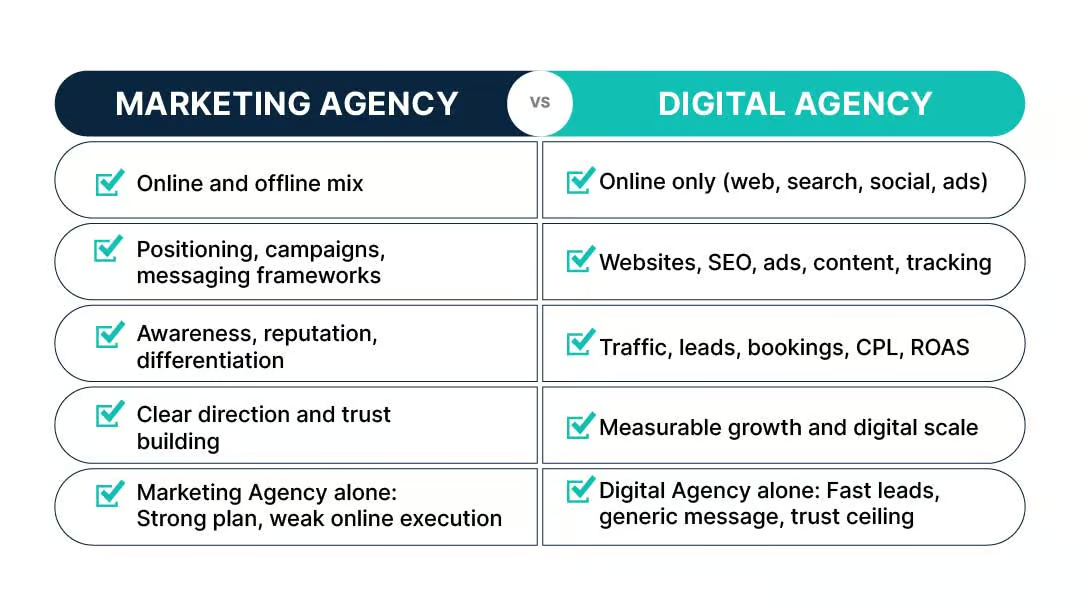
Marketing Agency vs Digital Agency: Key Differences
Marketing Agency
- Primary role: Strategy, positioning, brand trust
- Core question: “What should we do to grow?”
- Starting point: Research, audience clarity, messaging
- Success looks like: strong reputation, clear differentiation, cohesive campaigns
Digital Agency
- Primary role: Digital execution and performance
- Core question: “How do we win online?”
- Starting point: Website, SEO, ads, tracking
- Success looks like: traffic, leads, bookings, measurable digital ROI
They’re not the same. They’re different skill sets.
The Hidden Gap When You Hire Only One Type
This is where the Marketing Agency vs Digital Agency conversation gets muddy in healthcare.
If you hire only a Marketing Agency
You’ll likely get a solid strategy and polished messaging. But then:
- the digital execution feels half-baked
- the SEO content either doesn’t rank or doesn’t convert
- the ads are not nuanced with clinical understanding
- leads come in low quality
- the growth plan is often dependent on offline campaigns
If you hire only a Digital Agency
You might get traffic and leads quickly. But then:
- the brand sounds generic (not distinct)
- the messaging isn’t precise
- there is an increased chance of a compliance breach
- campaigns become unmemorable without a longer-term narrative
- growth plateaus without trust building fast enough
Digital-only is too noisy. Strategy-only is too slow to move. Both are subpar solutions in healthcare.
Why Healthcare Brands Need a Hybrid Partner
In healthcare, growth happens most effectively when strategy and digital execution are joined at the hip (pun not intended). A hybrid partner fixes three core issues:
1) Compliance and scale must coexist
Ads and content in healthcare can’t use salesy or hype language, or you’re increasing trust drop-off (and complaints). A hybrid approach means the messaging foundation is safe and trustworthy first, then every digital channel must respect it.
2) Trust signals must be built across the whole presence
Ranking in search and conversion both rely on credibility and perceived trust (especially in local markets where services are face-to-face). A hybrid partner aligns the full picture:
- clinical authority on your website
- accurate, useful content
- clear service pathways
- consistent digital footprint
- genuine reputation building
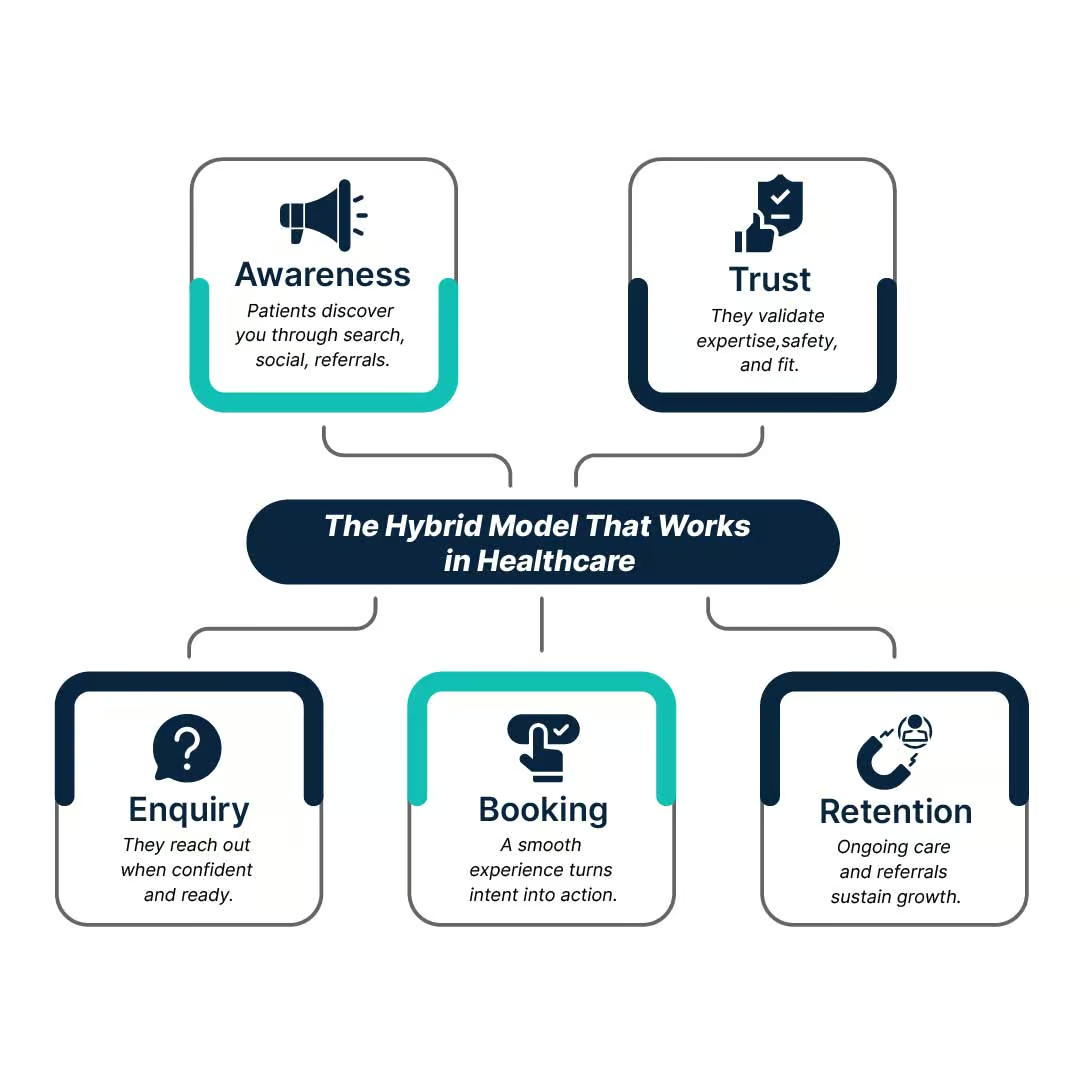
3) The full patient journey must be designed
Complex decisions (especially ones impacting health or budgets) take time and reassurance in healthcare. A hybrid team maps the whole patient journey:
- awareness
- education
- trust reinforcement
- enquiry support
- booking ease
- retention and referral
It’s not realistic to support all of those channels through a single touchpoint.
Square Meters Digital: Complete Marketing + Digital Delivery
Square Meters Digital operates as a hybrid healthcare growth partner because it is proven and works in the real world.
We blend:
- Marketing Agency mindset: positioning, audience clarity, compliant messaging, campaign strategy
- Digital Agency muscle: website, SEO, content, paid ads, social and education delivery, analytics and funnel conversion
Not two different departments — one integrated service.
Which means every ad, page, and post supports the same strategy, speaks to the same audience, doesn’t breach safe boundaries, and funnels patients toward booking confidently.
Our Full-Funnel Healthcare Framework
Our full-funnel hybrid healthcare marketing model looks like this in practise:
Stage 1: Strategy and market clarity
We set the foundations:
- ideal patient / participant types
- what they value most
- how they search
- competitor gaps
- your service ladder and offers
- compliant claims boundaries/
Stage 2: Trust-focused messaging
We shape:
- your “why us” story
- service narratives that educate without overclaiming
- culturally safe communication
- a brand voice that staff and digital channels can share
Stage 3: Digital foundations
We build or refine:
- website structure, aligned to search intent
- service pages that answer real questions
- trust elements placed where decisions happen
- landing pages that convert ethically
Stage 4: Visibility (search and social)
We drive:
- local SEO and authority growth
- expert-driven education content
- paid campaigns with proper targeting
- retargeting in longer decision journeys
- social series that reinforce trust
Stage 5: Conversion and retention

We optimise:
- enquiry pathways
- booking friction
- follow-up automation
- repeat care and referral engines
- community touchpoints that keep your brand top-of-mind
Each stage feeds into the next, that’s how healthcare growth compounds.
Choosing the Right Partner: Healthcare Vetting Checklist
Pre-hire screening questions for any agency or firm you’re working with:
- Do they have healthcare marketing experience?
Ask how they keep your claims compliant and within marketing-safe boundaries.
- Can they help you build trust, not just clicks?
Ask how content is produced and reviewed, and how they help your brand build a credible digital presence.
- Do they tie brand to performance?
Ask how messaging changes when lead quality is not right.
- Are they full-funnel in their approach?
Ask how they help you drive awareness through to retention (across the entire decision funnel).
- Will they present a plan before tactics?
If they pitch straight to “how we can help you with SEO and Google Ads” without talking about market research or strategy, you are hiring activity, not growth.
Final Takeaway
Marketing Agency vs Digital Agency: the difference matters in healthcare more than in most industries, because the stakes are higher.
- Marketing Agencies do strategy, positioning, growth direction, and trust-building.
- Digital Agencies do website, SEO, content, paid ads, and social, usually for performance.
- Healthcare requires both working together and under the same strategy (brand and content, plus digital execution), because
trust is crucial for bookings
compliance is non-negotiable to protect patients and brands
expertise supports SEO rankings
digital performance is required for scale
A full-service hybrid partner like Square Meters Digital is the best match for healthcare growth today — one team, one plan, and full-funnel execution.